ChatGPT Ads

Reach buyers while they are still deciding, inside ChatGPT

Your customers now work through their options in a conversation, not a results page. We build and run paid placements inside that conversation, with the same discipline we apply to search and shopping.

Sponsored placement
which option is best for a team our size?
Sponsored
Illustrative mockup of a sponsored placement in a conversational answer.
Work with us on ChatGPT Ads

A new placement, not a new set of rules

Assistant traffic behaves differently from a results page. Intent arrives mid-conversation, sessions are longer, and a single answer can end the search. Most teams either ignore the channel or treat it like display inventory.

We run it as performance media: measured against pipeline, not impressions.
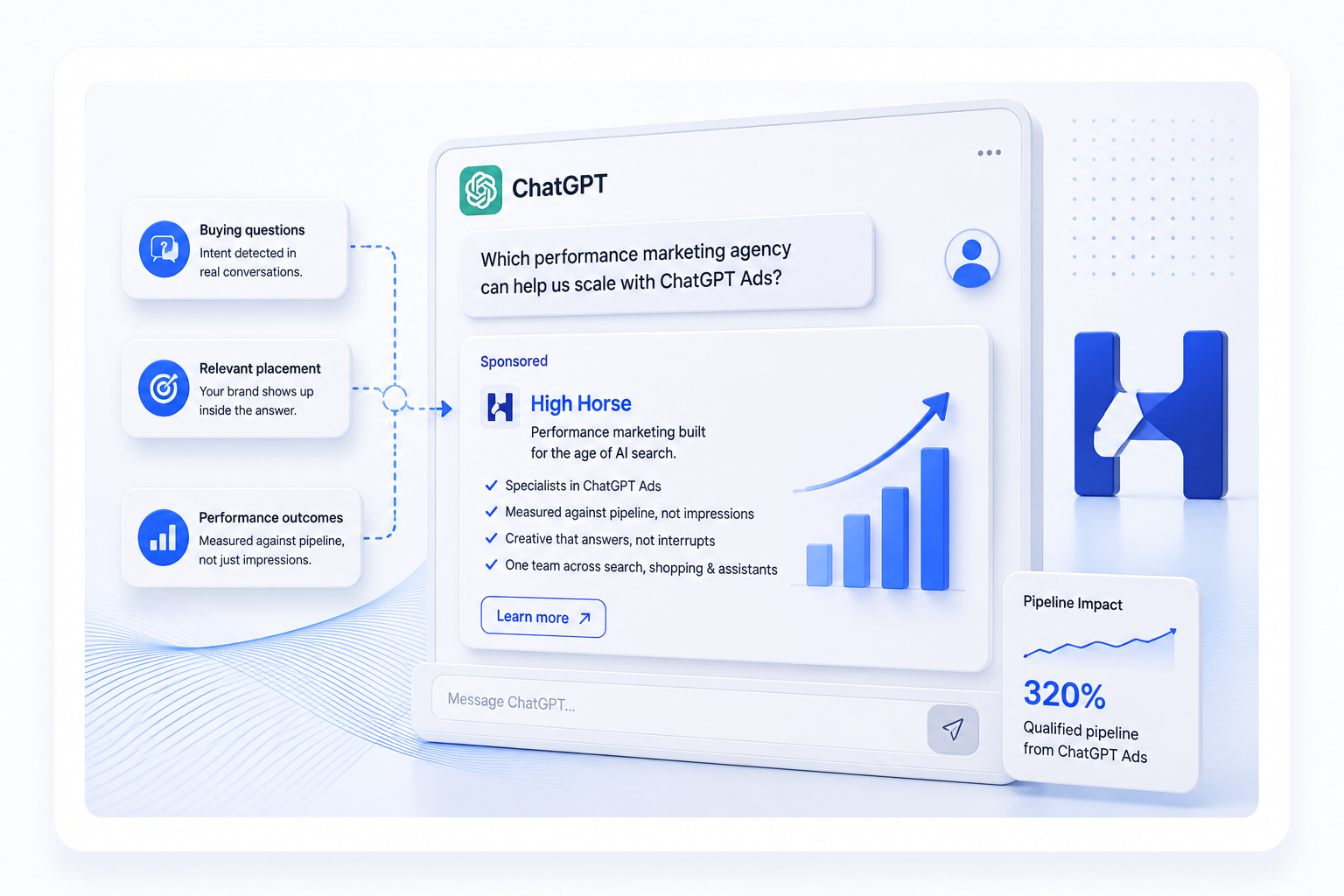
  • Placements built around buying questions, not broad audiences
  • Creative written for a conversation, not a banner slot
  • Spend judged against qualified pipeline, not impressions
  • Overlap with your paid search and shopping accounts managed deliberately
  • Reporting that shows what the channel added, not what it touched
Image placeholder
Why this is hard to get right

The channel is young. The mistakes are already predictable.

Four problems account for most of the wasted spend we see when we take over an existing account.

01

Intent is buried mid-conversation

The commercial moment is rarely the first message. Targeting the opening question wastes most of the budget.

02

Attribution does not look like search

Sessions are long and often end off-platform. Without a measurement plan agreed upfront, results become an argument.

03

Creative that reads like an ad gets ignored

A placement inside an answer has to be useful in the same sentence it sells. Repurposed display copy fails here.

04

It cannibalises what you already pay for

Run without controls, the channel buys clicks your brand search was getting for less. That needs watching from day one.

Image placeholder
Why choose us for this

We already own the rest of your search demand
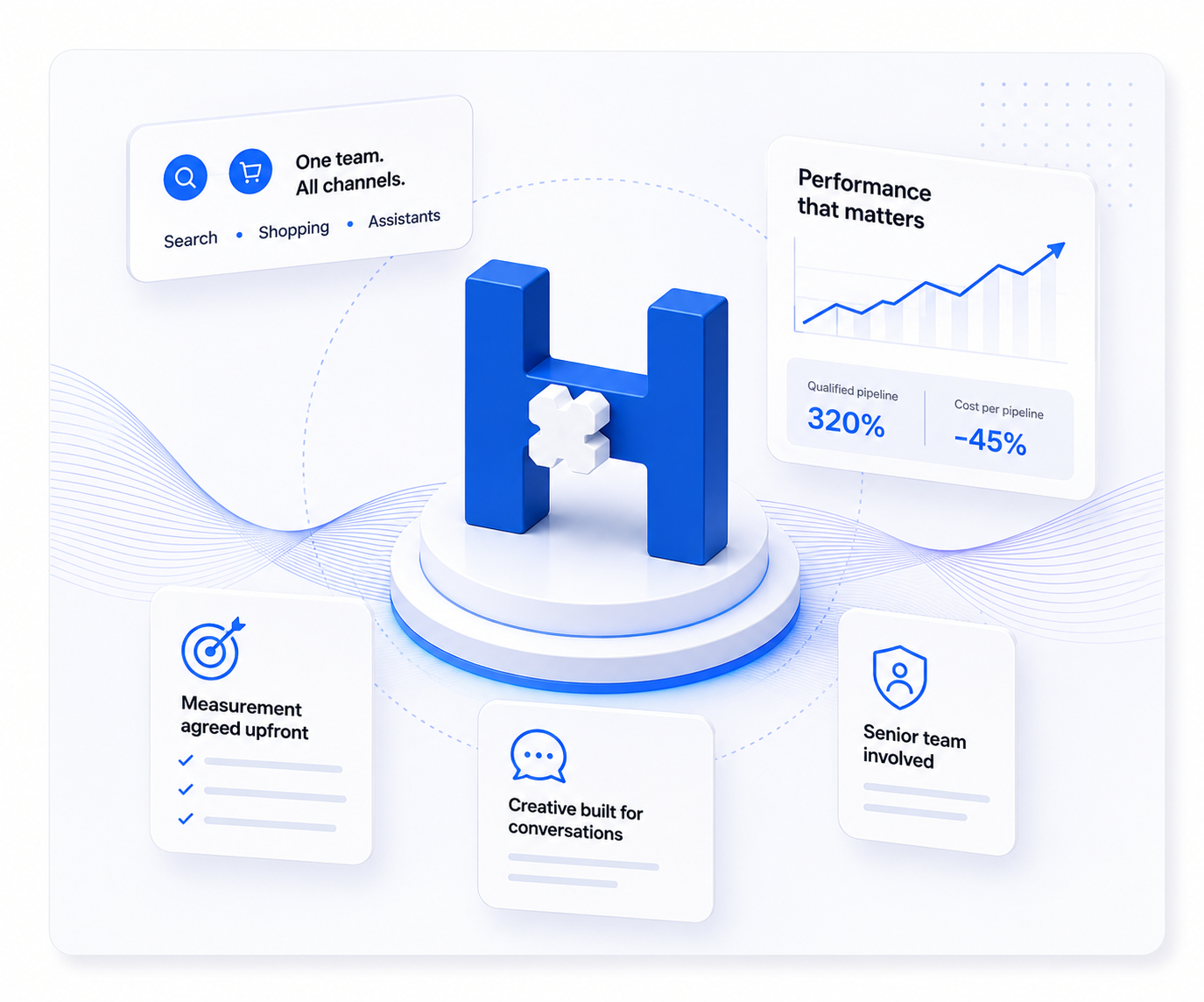
  • One team across search, shopping and assistants

    The same people running your paid search run this, so overlap and cannibalisation get caught rather than reported later.

  • Measurement agreed before spend

    We define what counts as a result, how it is tracked, and what the channel has to beat, in writing, before the first campaign goes live.

  • Creative written for conversational placements

    Copy that answers the question it appears next to. Tested in small batches rather than shipped as one big idea.

  • Senior involvement throughout

    A small team, with the people who scoped the work still on the account at month six.

Get in early, while the auction is still cheap

We will scope a first test against your existing paid search data, so you know what it should cost before you commit budget.

Book a Strategy Call
What we run

Six ways to buy attention inside the conversation

Availability varies by market and objective. We scope the mix around what your account can actually measure.

In-answer sponsored placements

Paid units that appear alongside a generated answer, matched to the question being asked rather than a keyword list.

Product and catalogue placements

Structured product data surfaced when someone is comparing options, priced and ranked against your shopping feed.

Conversational intent targeting

Buying signals mapped from how questions are phrased, so budget goes to the turn where a decision is close.

Assisted-journey retargeting

Re-engaging people who researched in an assistant and left, coordinated with your existing retargeting so you do not pay twice.

Objective-led campaign builds

Separate builds for demand capture, comparison and brand defence, each with its own budget and success metric.

Creative and landing-page testing

Variants tested against the questions they appear under, with the landing experience treated as part of the ad.

How we work

Four steps from first test to steady spend

You see the numbers at every stage. Budget only scales when the unit economics hold.

01

Audit and opportunity sizing

We review your paid search and shopping data to find the questions worth buying, and what a click should be worth.

02

Measurement and build

Tracking, objectives and account structure set up first, then campaigns built against them.

03

Controlled test

A capped test across two or three placement types, with creative variants, run long enough to read.

04

Scale and report

Budget moves to what holds up. Monthly reporting covers what changed and what we are changing next.

Results

What we report on

Placeholder figures. Real client results to be supplied before this page goes live.
Placeholder

00%

Change in qualified leads from assistant traffic

Placeholder

0.0x

Return on ad spend against agreed benchmark

Placeholder

00%

Reduction in cost per qualified lead

Placeholder

00

Days from kickoff to first live campaign

Before you ask

Questions we get about ChatGPT Ads

All questions →

Availability depends on your market, category and objective, and the inventory is still changing. The first thing we do is confirm what you can buy today and what is worth waiting for, rather than selling you a package that does not exist yet.

Paid search buys a keyword at the moment of a query. This buys relevance inside a longer conversation, often earlier in the decision. The two overlap, which is why we run them together and watch for cannibalisation.

Enough to reach a readable result on two or three placement types, which we size from your existing paid search costs. We would rather scope a smaller test that answers the question than spread a large one thin.

We agree what counts as a result before launch and instrument for it, combining platform data with your own CRM or analytics. Where attribution is genuinely uncertain, we say so instead of claiming credit.

We stop, and we tell you why. The test is capped and the reporting is honest, so a negative result costs you a defined amount and leaves you with a clear answer.