
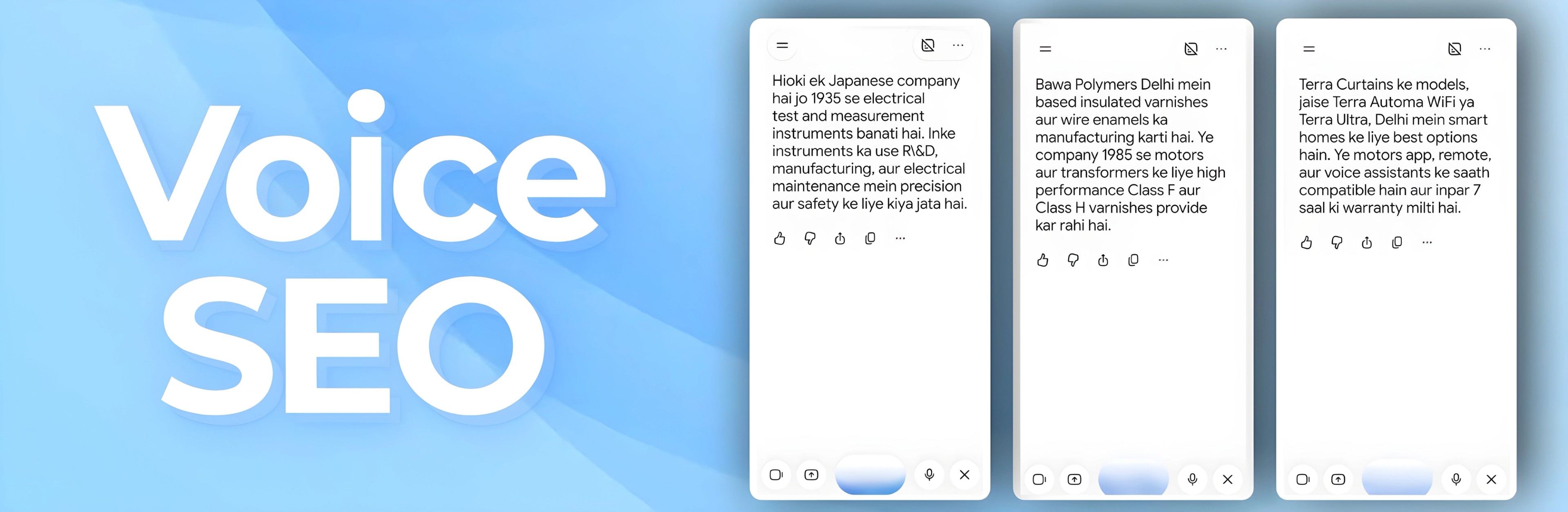
Understanding Voice Search Optimization
Voice SEO is the process of optimising your website and content so it can be discovered and delivered through voice-based search queries. Unlike traditional searches, voice queries are more conversational and question-based. Voice assistants such as Google Assistant, Siri, and Alexa prioritise content that provides clear, structured answers. Voice SEO focuses on ensuring that search engines can easily interpret your content and deliver it when users ask voice-based questions.
The Growing Impact of Voice Search
Voice search is becoming a key part of the digital discovery process. Millions of users rely on voice assistants to find local services, compare products, and gather information instantly. If your content is not optimised for voice queries:
Optimising for voice search ensures your brand remains visible as search behaviour evolves.


How Voice SEO Helps Businesses Grow
Voice SEO helps businesses capture search demand generated through conversational queries. Benefits include:
Key Components of Voice SEO
Effective voice search optimization requires multiple elements working together. Our Voice SEO approach includes:






Frequently asked questions
All questions →Voice searches are longer, conversational questions. Users expect quick answers, so search engines prioritise structured, clear, and authoritative content.
Voice SEO tends to deliver the strongest results for businesses with a local presence—restaurants, clinics, home services, retail stores—because voice queries often include "near me" or location-specific phrasing. Service-based businesses that answer common how-to or what-is questions also benefit, since voice assistants frequently pull from featured snippets and FAQ-style content. That said, any business whose customers ask natural-language questions about products, services, or availability can gain visibility through voice search optimisation.
Voice SEO is an extension of organic search optimisation, so timelines depend on factors like your current domain authority, content quality, and competition in your space. Some businesses see their content surfacing in voice results within a few weeks of structured-data and content updates, while more competitive industries may take several months of sustained effort. During a strategy call we can give a more specific outlook based on your current search presence.
Yes—voice search and local search are closely connected. A large share of voice queries are location-based ("best dentist near me," "plumber open now"), and voice assistants pull answers from Google Business Profiles, local packs, and schema-marked pages. Optimising for voice means ensuring your business information is accurate, your content answers location-relevant questions naturally, and your structured data is properly implemented—all of which strengthen local visibility in traditional search as well.
We combine conversational keyword research, structured content frameworks, featured snippet optimization, and local SEO signals to improve voice search visibility.